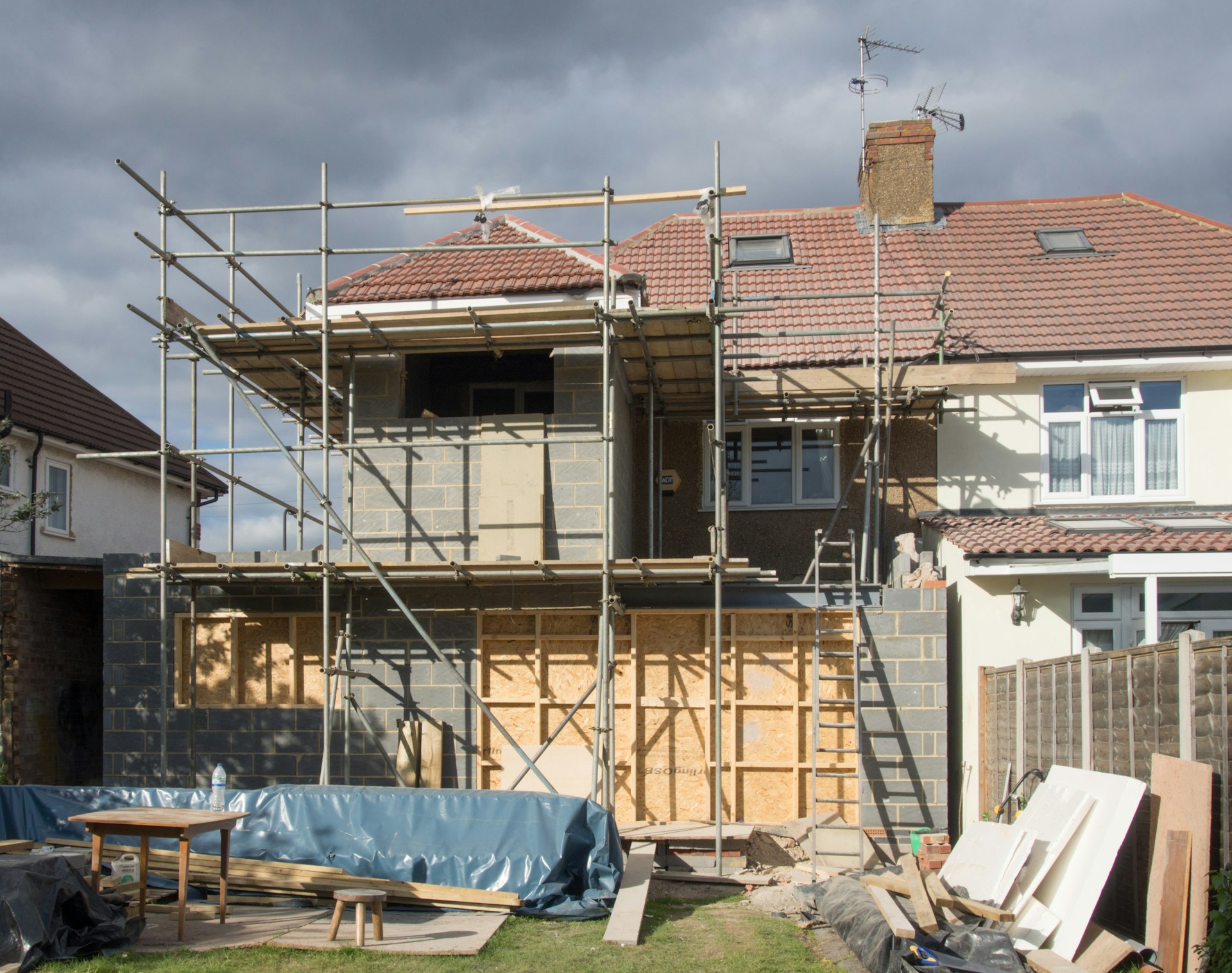

Adding space to a house is the most ambitious remodeling project you can take on. Done right, the addition reads as part of the original house — same trim profiles, same window proportions, matched siding and roofline. Done wrong, it looks like the house grew a tumor.
Every addition is an exercise in matching: matching detail, matching material, matching the underlying logic of the original house. Some of the matching is mechanical (siding profiles, roof pitch); some is judgment (where the new roof ties in, how the addition sits relative to the original mass).
- Room additions — bedroom suites, family rooms, sunrooms, mudrooms
- Second-story additions — over an existing footprint when you can’t go out
- Bump-outs — extending a kitchen, bath, or living room by 4–8 feet
- Garage conversions and additions — flex room, ADU, dedicated workshop
- Detached structures — guest cabin, pool house, shop with apartment
Every project goes through engineering, permits, and existing-conditions analysis before a foundation goes in. The pre-construction phase is often longer than the build itself:
- Site survey and existing conditions — accurate measurements of the part of the house you’re attaching to. We’ve seen plans drawn off Zillow that miss a foot in critical places.
- Engineering — beam sizes, foundation type, load paths. A second-story addition is mostly an engineering problem; the visible carpentry is the easy part.
- Permits and zoning — setbacks, height limits, lot coverage. Sometimes a project shifts because the original design exceeds an envelope; we’d rather know in week two than week ten.
- Utility coordination — electrical service capacity, septic capacity (if applicable), HVAC sizing for the new envelope.
Once permits are pulled and engineering is locked in, construction is mostly mechanical. Site protection, foundation, framing, weather-tight envelope, then the parallel finish trades. The two riskiest moments are the dry-in (when the existing roof gets opened up to tie in the new roof) and the trade transitions inside the addition. We schedule both around weather windows and trade availability so they don’t compress.
Match details matter more than people expect:
- Siding profile. A 6-inch lap doesn’t match a 4-inch lap. Period. We’ll find the original.
- Window proportions and grid pattern. A new window’s sash dimensions, casing depth, and divided-light pattern should match the originals. Sometimes that means custom; sometimes a stock window is close enough.
- Roof pitch and overhang. Tying a low-pitch roof into a steep one looks wrong even if the math works. We’ll explain the trade-offs.
- Trim profiles. Crown, casing, baseboard. Original profiles are often unavailable as stock; we’ll mill replacements when needed.
- Paint and stain. Matching paint over time is harder than it sounds — colors fade differently in sun. We bring sample boards.
By the time it’s painted, you should have to look twice to find the seam. That’s the goal.
The other reality of additions is that you’re living in the house while it happens. We minimize the disruption by phasing the build so dust and noise stay in the addition’s envelope as long as possible. The existing wall typically stays intact until the new structure is dried in — that way you don’t have an open hole into your dining room while it rains. When it’s time to break through, we plan for it: a clear weekend, plastic barriers, and a crew that gets the cut, framing, and rough drywall back to a closeable state in days, not weeks.
For larger additions, expect a 4–9 month timeline from contract to walkthrough. The schedule is dominated by permits, engineering, and weather windows in roughly that order. Inside that window there are 2–4 weeks where things feel acutely disruptive (dry-in week, the wall-break week, the trade-finish push); the rest of the time the work is happening on the new envelope and you barely notice.
Additions are expensive per square foot — usually more than the per-square-foot cost of the existing house — because everything is custom and you’re paying for the integration with what’s already there. A small bump-out can run higher per square foot than a large addition because the fixed costs (foundation work, roof tie-in, permits) don’t scale down. We’ll walk through the math early so you can decide whether the bump-out really earns its cost or whether reworking the existing footprint accomplishes the same goal.
A few alternatives that come up in early conversations and are worth weighing honestly:
- Reconfiguring existing space. Moving a wall and rebuilding the existing layout is roughly half the cost per square foot of an addition — and often the actual problem is layout, not square footage.
- Finishing unfinished space (basement, attic, garage). Cheaper square foot than an addition; usually less disruptive; depends on whether the unfinished space has the right bones (ceiling height, egress, mechanical access).
- Building a detached structure instead of attaching to the house. Sometimes a detached studio, ADU, or shop is the right answer when zoning allows — no roof tie-in, no wall break, simpler engineering.
We’ll evaluate all three options against an attached addition before recommending the most expensive path.
A well-executed addition almost always returns less at resale than it costs. The math improves substantially when the addition fixes something genuinely missing in the original layout — a master suite where there wasn’t one, a second bath in a one-bath house, a family room in a layout that didn’t have one. The math gets worse when the addition just enlarges something the house already had — a bigger living room when the existing one was fine.
We’re not trying to talk anyone out of an addition; we’re trying to make sure the spend matches the value you’ll actually get. If you’re planning to stay in the house for many years, the resale math matters less than the lived-in math. If you’re three to five years out from selling, it matters more.