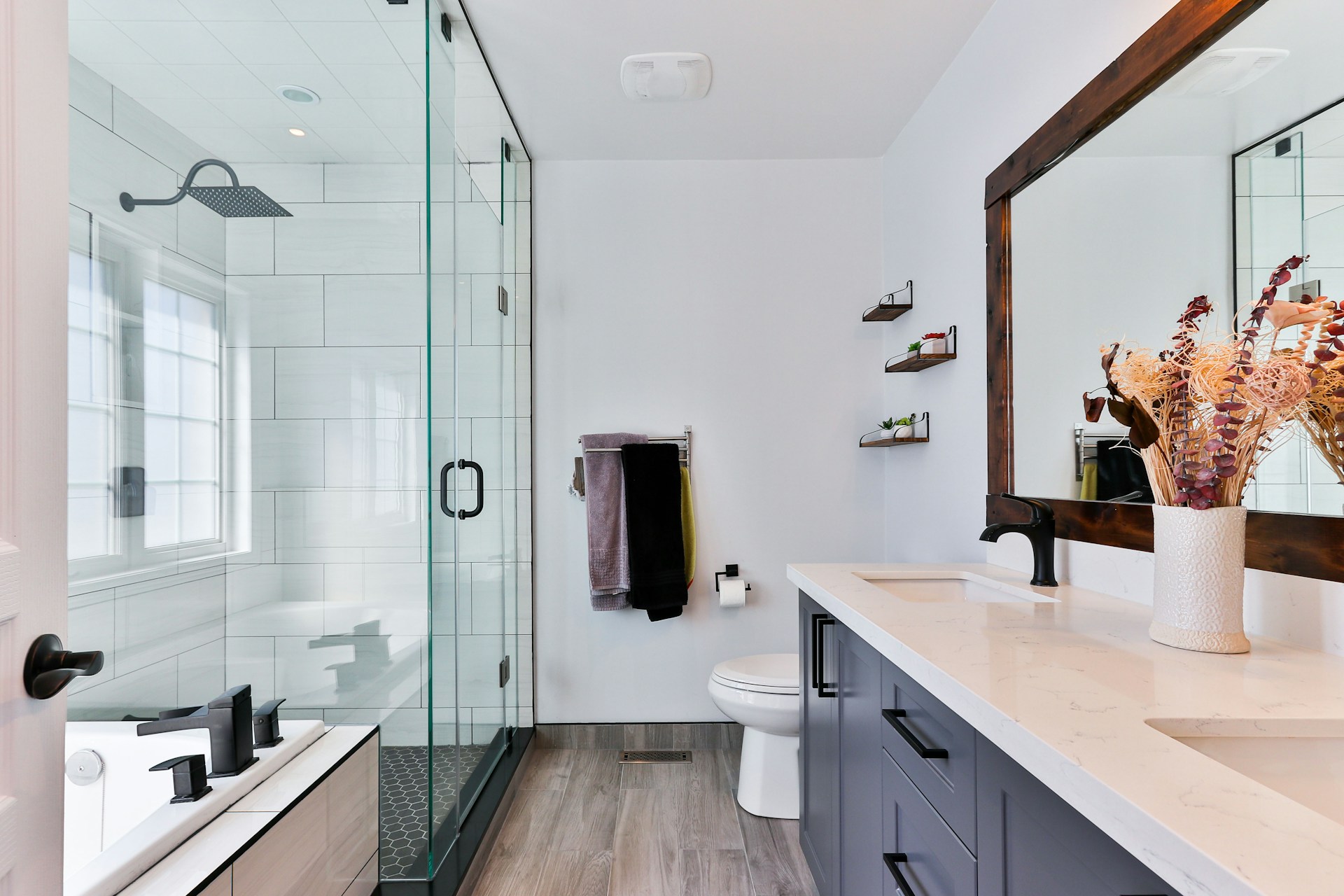

Bathrooms look simple on a Pinterest board and get complicated about ten minutes after demo. Waterproofing, slope, ventilation, and the order of trades all matter, and getting any of them wrong shows up as a leak, a mildew problem, or a tile that pops in two years.
The good news is that bathrooms are smaller than kitchens, which means the budget goes further per square foot and the timeline is shorter. The bad news is that the margin for error is smaller too — every tile cut, every membrane seam, every grout line is visible.
- Layout reworks — repositioning vanities, toilets, showers, or tubs
- Custom tile — full-shower walls, niches, curbless entries, heated floors
- Plumbing fixtures — single- or dual-control valves, rain heads, body sprays, freestanding tubs
- Electrical — GFCI circuits, vanity lighting, exhaust fans on humidity sensors
- Ventilation — properly-sized fan vented to outside (not an attic)
- Vanities and storage — semi-custom, custom, or carefully-selected stock
We use waterproof membrane on shower walls, slope curbs and pans correctly, and choose fixtures that have a parts pipeline ten years from now. Ventilation gets sized to the room, not the fan box. Grout gets sealed. Tile gets back-buttered where it should.
The single most common mistake we see in DIY or budget bathroom remodels is shower waterproofing. Cement board on the studs and standard thin-set is not waterproof. Tile is not waterproof. The membrane behind the tile is what keeps water out of your wall cavity, and the membrane is the one thing you can’t fix without tearing it all apart again.
A few small layout decisions add years of usability:
- A curbless shower is more accessible and more luxurious than the bumped curb most builder-grade bathrooms ship with.
- A niche in the shower wall keeps shampoo bottles off the floor and looks deliberate when tiled in.
- A comfort-height toilet (17–19″ rim height) is easier on the knees than a standard 15″ — same footprint, different bowl.
- Two vanity drawers beat one bank of doors; you’ll actually use the space.
Most full remodels run 3–5 weeks. We can usually keep one bathroom in service if it’s the only one in the house — we plan demo and tile work around it so you never lose access to plumbing for more than a day.
If you’re doing both a primary bath and a hall bath in the same house, doing them sequentially rather than simultaneously is almost always the right call: longer total schedule, but you keep a working bathroom the whole time.
Tile and grout decisions outlive the rest of the bathroom finishes. A few things we’ve learned over many bathrooms:
- Larger tiles (12×24 and up) on shower walls have fewer grout lines, which means less to keep clean. Smaller tiles in mosaic accents or shower floors give you the visual interest without the maintenance everywhere.
- Epoxy grout holds up to mildew and color-fading better than cement-based grout, especially in showers. Modern single-component epoxy grouts are nothing like the old two-part products — workable, color-stable, and far less prone to staining.
- Avoid pure-white grout in shower floors. It looks great for six months and grays out by year two. A mid-tone gray or a warm taupe ages cleanly and doesn’t telegraph every dust speck.
- Caulk, not grout, in the corners. Where two different planes meet (wall-to-wall, wall-to-floor, wall-to-tub) movement happens; caulk handles it, grout cracks. We use a color-matched silicone in those joints and it lasts years instead of months.
The most-asked layout question we get on bathroom remodels is what to do above the vanity — a flat mirror, a recessed medicine cabinet, or a frameless surface-mount cabinet. Recessed gives you the storage without the visual bulk; frameless surface-mount is the modern compromise; flat mirror loses you a real chunk of usable storage. We’ll usually recommend recessed unless the wall is shared with plumbing or an exterior wall (where the cavity won’t accept it).