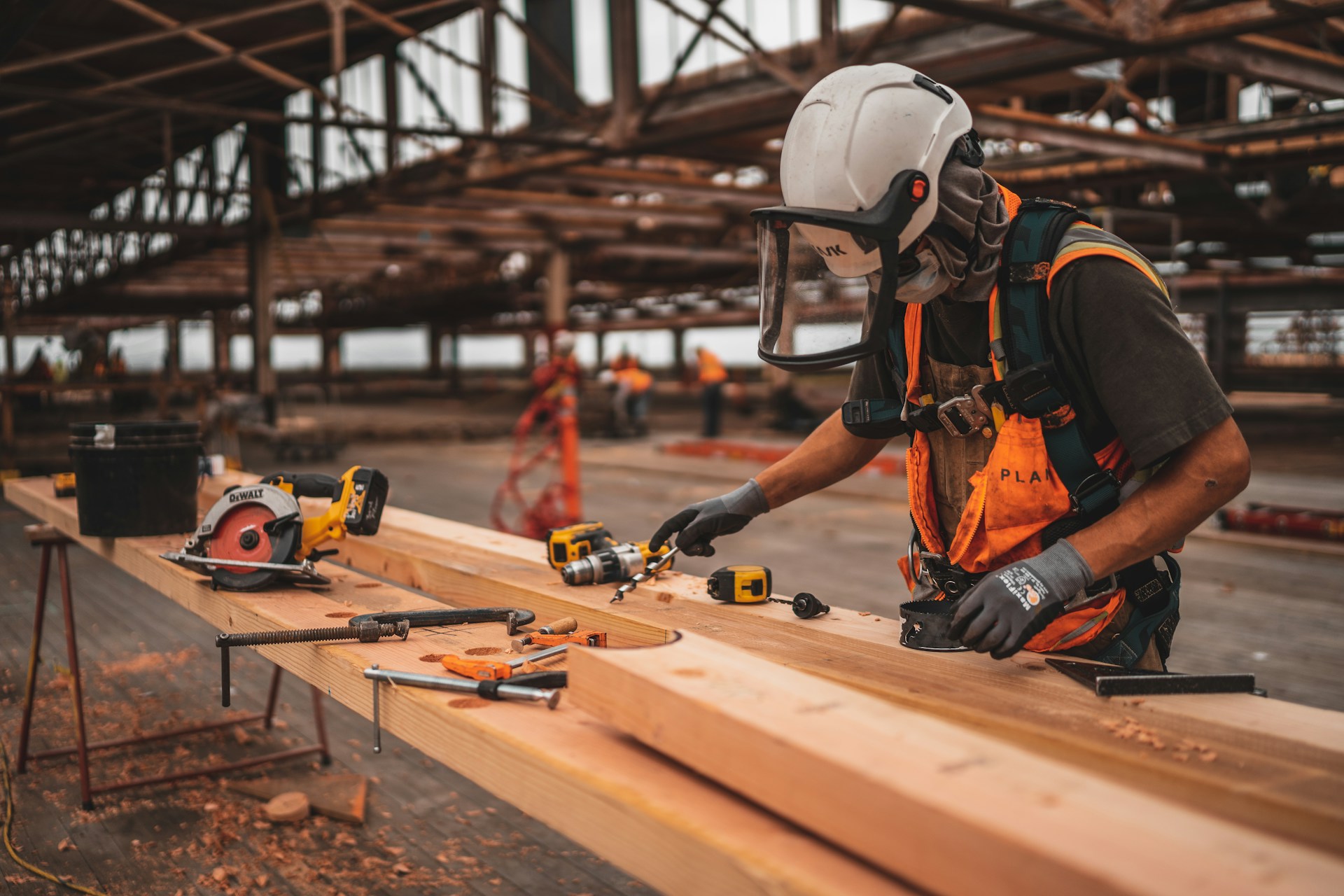

Carpentry covers a lot of ground, from framing a new wall to mitering a return on a piece of crown molding. Our team handles both ends of the spectrum and everything in between, with a bias toward doing it once and doing it right.
- Framing — interior partition walls, headers, floor systems, structural repair
- Trim and finish — baseboards, casings, crown, wainscoting, ceiling treatments
- Built-ins — bookcases, mudroom benches, window seats, closet systems
- Doors and windows — install, replace, re-trim
- Decks, porches, and pergolas — pressure-treated, cedar, or composite
- Structural repair — rotted sills, sagging beams, damaged subfloor, joist sistering
We measure twice, install square, and leave reveals consistent. Joints are glued and fastened, not just nailed. Returns are mitered, not butted. When we hand a project off to the painter, the trim is set up to accept paint cleanly with minimal caulk.
Older homes — anything pre-war especially — bring their own set of challenges. Walls are rarely plumb, floors are rarely level, and the existing trim profiles are often nothing you’ll find at a big-box store. We’ll match profiles by milling them to spec when needed, and we’ll tell you when “blending into the existing” is a better choice than fighting to get everything dead flat.
Sometimes what looks like a finish problem — a door that won’t close, baseboard pulling away from the wall, a tile floor that’s developing cracks — is actually telling you something about the structure underneath. We diagnose those before bidding the cosmetic fix, so you don’t paint over a problem that comes back in six months.
Cabinet hinges, drawer slides, deck screws, deck-board fasteners, hidden ledger flashing — the hardware on a carpentry job determines how long the visible work lasts. We use full-extension undermount slides on drawers, soft-close concealed hinges on cabinet doors, stainless or coated fasteners on anything exterior, and proper joist hangers (not toe-nailed) on framed connections. The cost difference between cheap and good hardware on a typical kitchen is a few hundred dollars; the longevity difference is decades.
Deck failure modes are predictable: ledger pulls away from the house (flashing was wrong), posts rot at the base (no metal standoff to the concrete), boards cup or split (wrong grade, wrong fastening). We flash ledgers to a known detail, set posts on metal standoffs above the concrete, and use either hidden fasteners or quality face screws driven flush. Pressure-treated lumber gets one season to dry before stain or seal — putting finish on wet PT just traps moisture.