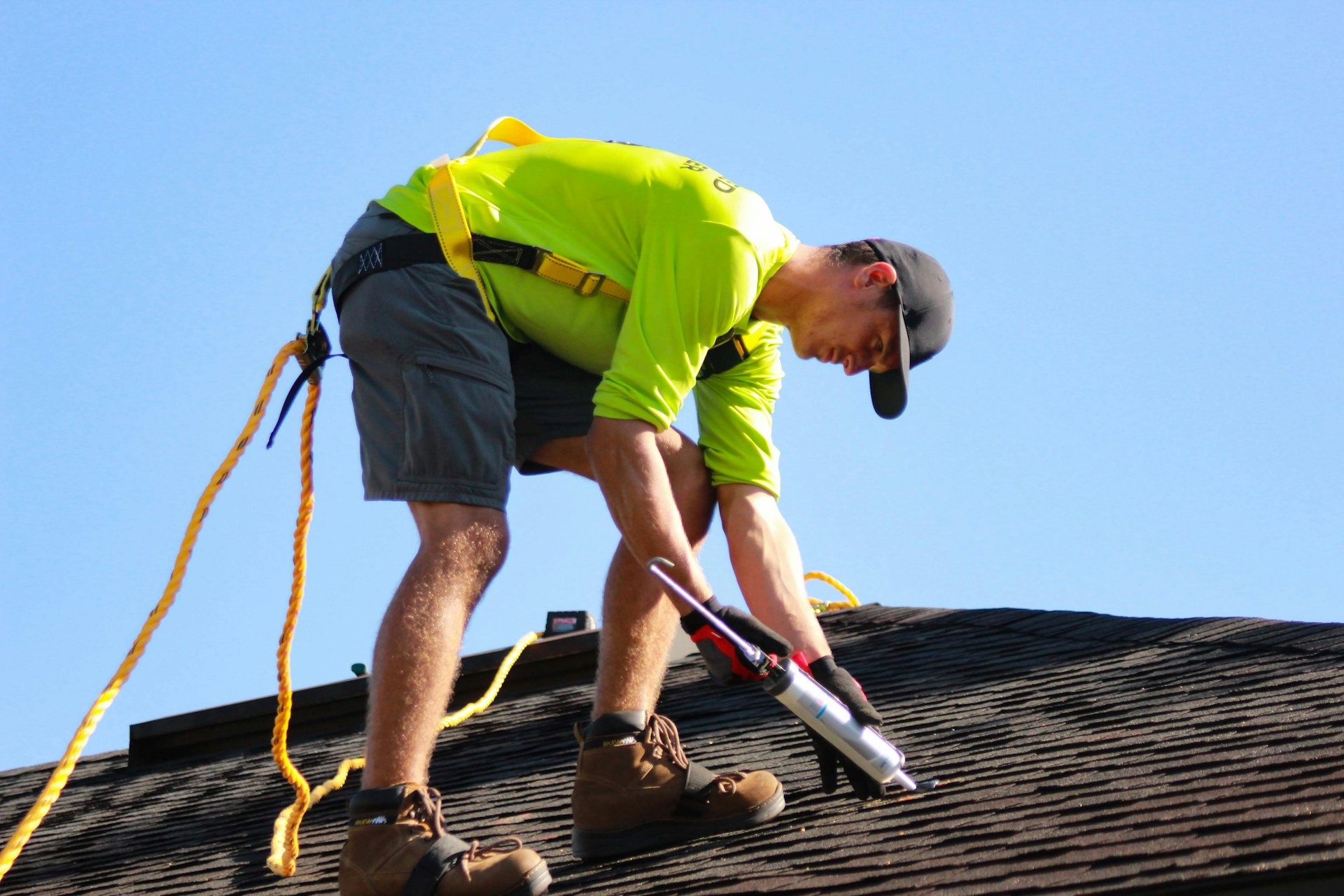

Your roof is the single most important system on the property — and the easiest one to ignore until it fails dramatically. We provide both routine maintenance and full replacement for residential and small commercial roofs across the area.
- Inspections — annual or post-storm; written report with photos
- Repairs — flashing, soft spots, missing shingles, ridge caps, valleys
- Tear-offs and re-roofs — architectural shingle, metal, low-slope membrane
- Gutter and downspout repair and replacement
- Skylight, vent, and chimney flashing integration
- Ice and water shield retrofit for vulnerable eaves and valleys
If the deck is sound and the leak is localized, a repair will buy you years. If you’ve got widespread granular loss, multiple leak points, or you’re nearing the 25-year mark, replacement is usually the better economic call. We’ll walk the roof, show you what we found, and give you a straight answer either way.
The math gets nuanced when a roof is past warranty but not failing. A $1,500 repair on a 22-year-old roof might be the right call if the rest of the system is sound; a $1,500 repair on a 22-year-old roof with widespread issues is just delaying the inevitable replacement at a higher cost.
Architectural shingles are the workhorse — 25–30 year warranty, reasonable cost, well-understood installation. Metal lasts longer, sheds snow better, and looks distinctive, but costs roughly twice as much up front. Low-slope sections (porches, additions, dormers) want a true membrane system, not “shingles laid almost flat.” We’ll match material to slope and budget rather than trying to push the same product on every job.
Most “roof leaks” we get called for aren’t actually roof leaks — they’re eave leaks. Failing gutters that overflow against fascia, ice dams that back water up under the first course of shingles, or kick-out flashing that was never installed where roof meets wall. We treat the eave as part of the roof system rather than as gutter trim, which is why our gutter and roofing crews coordinate on every project.
Heat tape or de-icing cable can buy you an annual fix for ice dam-prone eaves; the long-term fix is usually attic insulation and ventilation work that keeps the roof deck cold so snow doesn’t melt and refreeze.
Hail or wind damage? We can document the damage for your insurance carrier and work directly with the adjuster. The window for filing a claim varies by carrier — usually one year from the storm date — so don’t wait if you suspect damage.