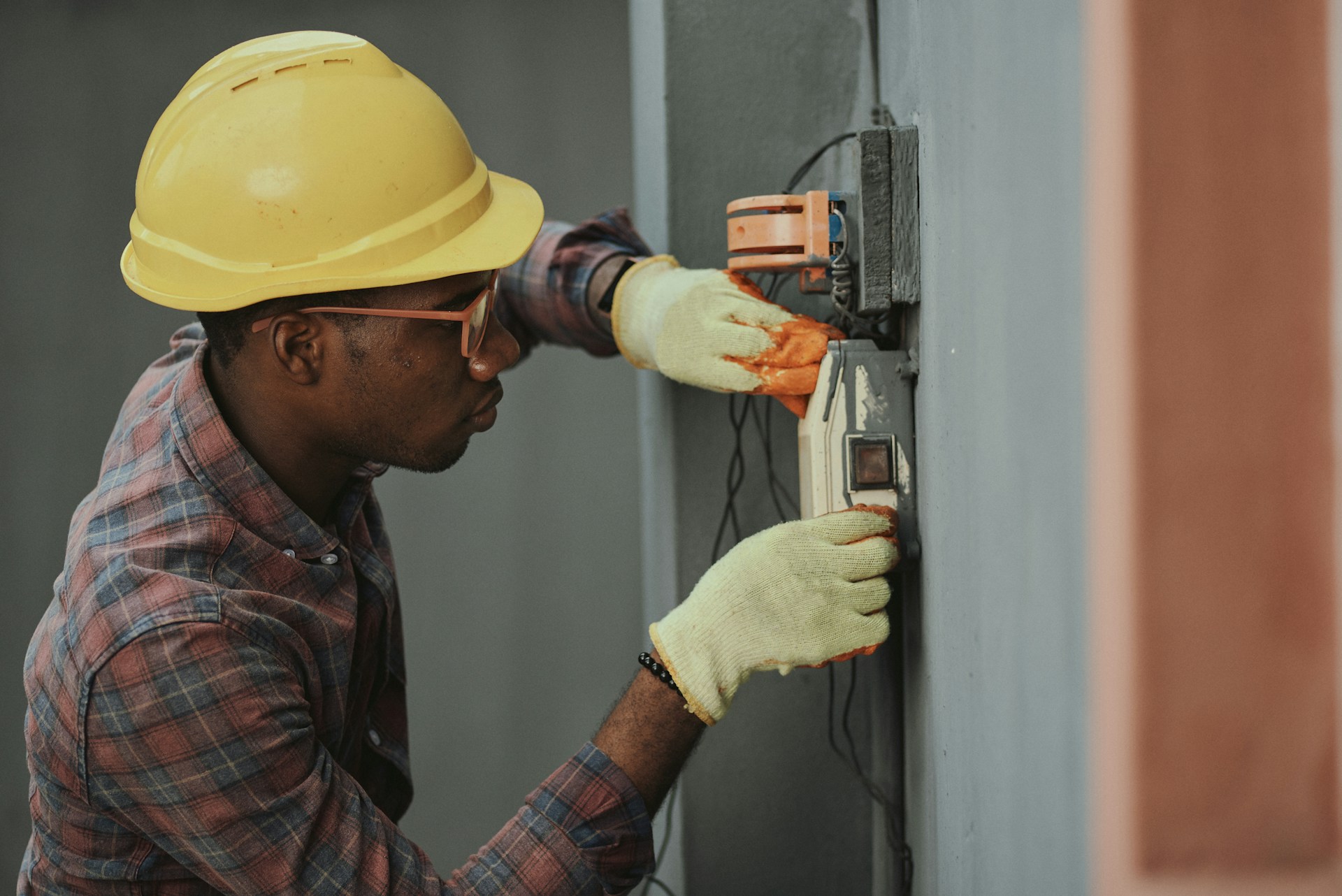

Electrical work is one of those services where the difference between “looks fine” and “actually safe” is invisible from the outside. Our electrical team is built around licensed work, careful diagnosis, and respect for the code that keeps your house from becoming a statistic.
Most homes built before the mid-1990s have at least one electrical issue that’s worth addressing — undersized service, missing GFCI protection in wet locations, an overcrowded panel, or a circuit that’s been “extended” one too many times by previous owners. None of these are emergencies on their own; all of them are worth fixing before they become one.
- Service panel upgrades — 100A to 200A, sometimes 400A for shops or all-electric homes
- Whole-home and partial rewiring (knob-and-tube replacement, aluminum branch-circuit repair)
- Fixture installs: recessed lighting, ceiling fans, dedicated circuits, smart switches
- Outlets, switches, GFCIs, AFCIs, and dedicated kitchen / bath / laundry circuits
- EV charger installation (Level 2, hardwired or NEMA 14-50)
- Generator interlock and transfer switches for portable or standby
- Troubleshooting nuisance breaker trips, flickering lights, and dead circuits
A panel that’s full, an outlet that warms up under load, an old aluminum splice — these are the things that start fires. Code has tightened in real ways over the last 30 years; AFCI requirements alone catch arc faults that older panels would let smolder for hours.
We pull permits where required, label every circuit clearly, and walk you through what we changed before we wrap up. If you’re remodeling, we coordinate with the rest of the build so rough-in is right the first time and we’re not chasing wires after drywall goes up.
Half the calls we take are diagnostics — a circuit that trips at random, a light that flickers when the dryer kicks on, an outlet that doesn’t work and never did. We bring a multimeter and a thermal imager, not just a screwdriver, and we don’t charge you for replacing parts that aren’t actually the problem.
If you’re upgrading the panel anyway, it’s worth thinking ahead. Adding a sub-panel feed for a future shop, a 50A outlet in the garage for an EV, or a generator interlock costs incrementally during a panel job and is expensive to bolt on later.
The same logic applies to whole-home rewires and major remodels. Pulling Cat-6 to every room while walls are open costs a few hundred dollars in materials and ten extra labor hours; pulling it after drywall is up is several times that and involves cutting fishing holes in finished walls. Same with conduit runs to a future hot tub, an electric vehicle, or a workshop subpanel — running empty conduit during a build gives you a corridor for a future circuit at almost no incremental cost.
Smart switches and dimmers have stabilized in the last few years to the point where we recommend them on most remodels. The Lutron Caseta family is reliable and works without a cloud account; the Z-Wave and Matter ecosystems work well if you’ve already standardized on a hub. The two things to avoid: switches that require a cloud login to function, and “smart bulbs” that lose state every time someone hits the wall switch. Wall-controllable smart switches with non-smart bulbs is the pattern that doesn’t make you call us back in two years.