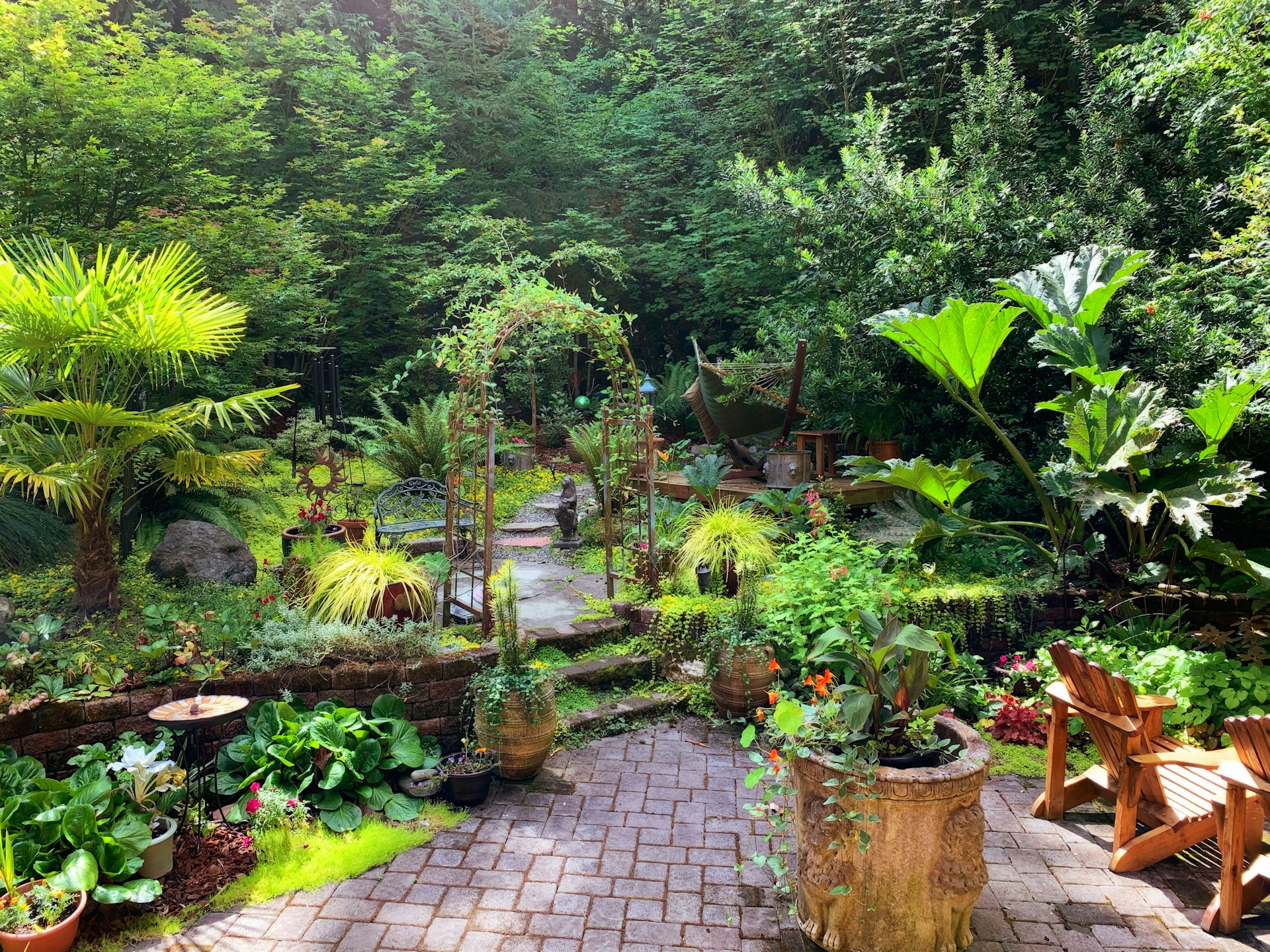

Hardscape is the bones of an outdoor space. Get the base right and a patio lasts decades; skimp on it and you’ll be re-leveling pavers in two years.
- Paver patios — concrete pavers, natural stone, permeable systems
- Walkways and steps — code-compliant rise/run, lit if you want
- Retaining walls — segmental block, boulder, or poured concrete
- Fire pits and outdoor kitchens — gas or wood-burning, integrated with the patio layout
- Stone veneer — pillars, planters, water features
- Driveways — concrete, paver, or chip-seal
Every project starts with excavation to undisturbed subgrade, geo-textile fabric where the soil calls for it, and a properly-compacted base of road base aggregate. Pavers get bedding sand and polymeric sand joints. Walls get drainage gravel, perforated drain tile, and proper batter. Concrete gets reinforcement and proper expansion joints.
That’s the boring underground stuff that determines whether the patio you see today still looks great in fifteen years. The visible work — pattern, color, edge details — gets all the attention but represents maybe 20% of how long the project lasts.
The other thing that determines patio lifespan is drainage. A patio that pools water freezes and thaws over the winter, and frost heave is what cracks pavers and tilts them out of plane. We slope every horizontal surface a minimum of 1/8″ per foot away from the house, run drain tile around walls, and treat permeable pavers as a real option for tough drainage situations rather than a marketing checkbox.
Retaining walls under 4 feet are usually a contractor’s call; over 4 feet typically require engineering and a permit. Wall failures are almost always a drainage failure first — water pressure behind the wall is what tips it over time. We over-engineer drainage on every wall we build because the cost delta is small and the failure mode is expensive.
Pavers, natural stone, and stamped concrete each have a place. Pavers are the most forgiving over time — if one settles or cracks, you can lift and re-set it without disturbing the rest of the surface. Natural stone has more visual character but costs more and is harder to repair invisibly. Stamped concrete is initially the cheapest option but cracks over the long term as the slab moves; once it cracks, the only honest fix is replacement, not repair.
For driveways specifically, paver driveways have come a long way and are now reasonable on cost. Concrete is still the workhorse where simplicity matters; chip-seal is the right answer for long rural drives where the alternative is gravel.