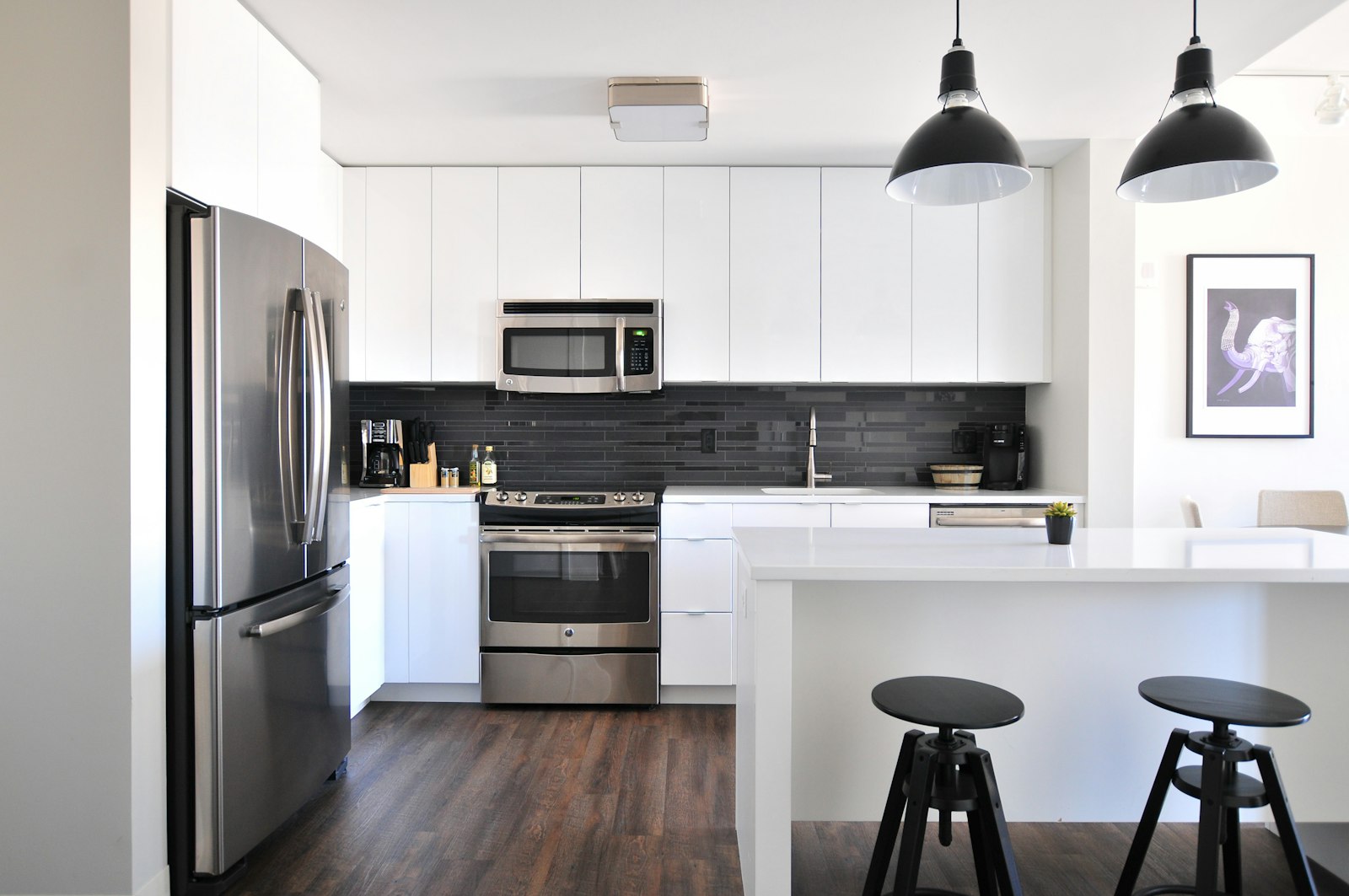

The kitchen is the room you spend the most awake time in, and the one with the highest return on remodel dollars. Our approach is built around three things in priority order: how you actually cook, what your home’s bones will support, and the look you want to live with for the next decade.
A kitchen remodel is the most coordinated job most homeowners ever undertake. Plumbing, electrical, HVAC, framing, drywall, tile, cabinetry, countertops, flooring, and appliances all have to land in the right sequence — and a single trade out of order can cost weeks of schedule. Working with a single team that owns the whole sequence (rather than coordinating six contractors yourself) is most of why these jobs go well.
- Layout and design — walk-throughs, sketches, and 3D mockups before demo
- Cabinetry — semi-custom and full custom, painted or stained, soft-close everywhere
- Countertops — quartz, granite, butcher block, sintered stone
- Appliances — coordinate sizing, gas/electric, ventilation, and integrated panels
- Plumbing and electrical — re-route under sink, add dedicated circuits, pendant lighting, undercabinet
- Flooring, tile, and backsplash — tied into the rest of the home
We start with a discovery walkthrough to understand budget, must-haves, and the spaces that frustrate you today. From there: layout options, material selections, a fixed-price proposal, and a build schedule with weekly check-ins. We protect adjacent rooms, keep the worksite clean, and never leave plumbing capped over a weekend.
Most kitchens are a 4–8 week build once demo starts. Cabinetry lead times are typically the long pole — 6–10 weeks from order to delivery for semi-custom, longer for full custom. We order materials before demo so the build doesn’t stall waiting on a counter.
A handful of choices set the trajectory of a kitchen project, and most of them happen before the first cabinet is removed.
Layout. Are you keeping the existing footprint or moving walls? Moving the sink or range is doable but expensive — drain lines and gas lines are the two most costly things to relocate. If your current layout works, putting the budget into materials and finishes pays off more than a layout change.
Cabinet box construction. Plywood boxes hold up over the long term; particle-board boxes are lighter on the wallet but don’t tolerate water as well, which matters under the sink. Hinges and slides are the two parts that wear; soft-close on both is now standard at any reasonable price point.
Counter material. Quartz is the workhorse — non-porous, no sealing required, consistent pattern. Natural stone (granite, marble, quartzite) has more visual character but needs sealing and is more sensitive to acids. Sintered stone is the high-end option for indestructibility.
Ventilation. A real range hood vented to outside is one of the highest-impact upgrades you can make. Recirculating microwave-hoods don’t really clear cooking smoke or grease; an exterior-vented hood does, and your paint and cabinetry will thank you.
Kitchen lighting wants to be three layers: ambient (recessed cans or a flush mount providing general fill), task (under-cabinet for the counter you actually work at, pendants over an island for prep), and accent (toe-kick or in-cabinet glass-front lighting if you’re going for it).
A common mistake is leaning entirely on overhead recessed cans, which throws shadows on every counter. Under-cabinet LED tape is the highest-impact, lowest-cost upgrade in most kitchens — it’s the difference between chopping with shadows on the cutting board and chopping with the work surface lit clearly. Specify dimmable on every layer; you’ll use a kitchen at brightness levels that change based on whether you’re cooking, eating, or cleaning up.
A few patterns repeat across kitchens that didn’t go well:
- Walking distance between sink, range, and fridge that doesn’t form a tight triangle. The “kitchen work triangle” is a real ergonomic principle, not a marketing trope. If preparing a meal means walking back and forth across the room, the layout is fighting you.
- Drawer vs. door choice — base cabinets storing pots and pans should be drawers, not doors. Doors with rollouts are a worse compromise than drawers from the start.
- Skimping on the hood in favor of countertop budget. Smoke and grease end up on the cabinets you just paid for.
- Picking finishes too early — material samples should be looked at on-site, in your kitchen’s light, ideally through a full day. Showroom lighting is misleading.
Kitchen budgets vary wildly by scope, material, and whether you’re moving plumbing/electrical. A cosmetic refresh (paint, hardware, counter, backsplash) is one number; a full gut with new cabinetry, appliances, and a layout change is several multiples of that. The most useful thing we can do early in a project is help you pressure-test where the money is going so you don’t end up with a beautiful counter and a fridge that doesn’t fit.
The single biggest budget surprise on most kitchens is the discovery work behind the demolition. Walls come open and reveal old plumbing routing, undersized circuits, mold from a long-ago slow leak, or framing that doesn’t match the engineering plan. We carry a contingency line on every kitchen estimate for exactly this reason — usually 10–15% of the project total — and we’d rather scope realistically up front than blow past budget mid-build.