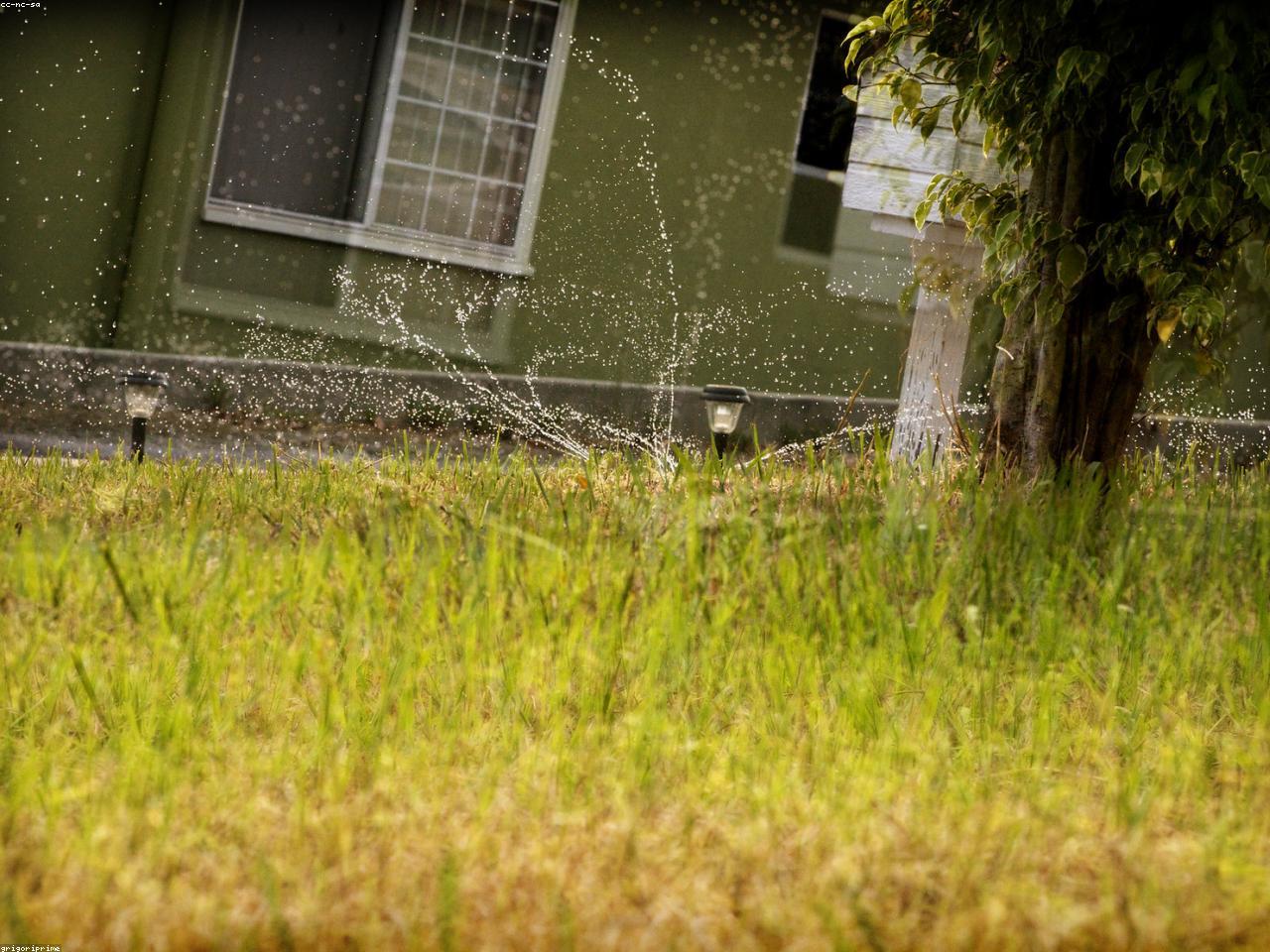

An irrigation system that’s tuned to your yard saves water, time, and the cost of replacing dead plants. A poorly-zoned one runs the south side dry while the shaded back yard rots. We design and service sprinkler systems for both ends of that spectrum.
- New installs — full-yard design with zoning by sun exposure and plant type
- Head and valve repair — replacement, depth adjustments, broken risers
- Coverage tuning — eliminate dry spots and overspray
- Controller upgrades — smart controllers that adjust to weather and soil moisture
- Drip conversion — replacing spray heads with drip in beds and tree wells
- Backflow preventer testing and replacement
- Spring startup and fall blowout — pressure test, head check, winterization
Every plant has a different water demand. Lawn wants 1″ per week; shrubs want a deep soak less often; vegetables want consistent moisture. Mixing those demands on one zone means something always loses. We separate them by demand profile so each zone runs at the right interval.
Sun exposure matters as much as plant type. South- and west-facing zones lose moisture twice as fast as north-facing ones in summer. A controller that runs all zones for the same duration is over-watering one and under-watering the other. Splitting by exposure is the single biggest efficiency gain on most retrofits.
In this climate, fall blowouts are not optional. Water expanding in a backflow preventer, valve, or head over the winter cracks the body and the repair is more expensive than the blowout would have been. We blow each zone clear with compressed air at controlled pressure and drain the mainline to the appropriate point.
Spring startup is the inverse — a slow pressurization with a head-by-head check for damage, leaks, and clogged nozzles, plus a controller tune-up for the season’s expected demand.
If your system runs but your bills are high or plants are stressed, the fix usually starts with a coverage audit. We mark each head’s actual reach with chalk, identify dry zones, and decide whether the issue is head spacing, nozzle wear, pressure, or zone allocation. Sometimes the right answer is replacing six heads; sometimes it’s redrawing zones from scratch.
A sprinkler system designed for 60 psi at the head will throw the wrong pattern at 35 or 80 psi. Old systems often run at whatever the city happens to deliver, with no regulation; modern systems use pressure-regulated heads that hold the design pressure regardless of supply variation. If you’ve noticed misting (over-pressure) or weak coverage (under-pressure), pressure regulation is usually the fix — and converting to pressure-regulated heads is a head-by-head retrofit you don’t have to do all at once.
Smart irrigation controllers are usually worth it on systems with three or more zones. The water savings from skipping a run after a rain event, or shortening a run during a cool week, add up over a season. The bad ones are bad — overcomplicating a problem that doesn’t need it — but the major brands (Hunter Hydrawise, Rachio, Rain Bird ESP-TM2) are reliable and pay back the small premium over a basic timer in a couple of seasons of water bills.