
Trees are the most valuable plants on your property and the easiest to ruin with bad pruning. We approach tree work the way an arborist would: structural cuts to set up healthy long-term form, deadwood removal, and minimal-impact pruning during the right window.
- Structural pruning — young and mature trees, on a 2–3 year cycle
- Crown cleaning — deadwood, suckers, crossing branches
- Crown raising and reduction — for clearance and balance, not topping
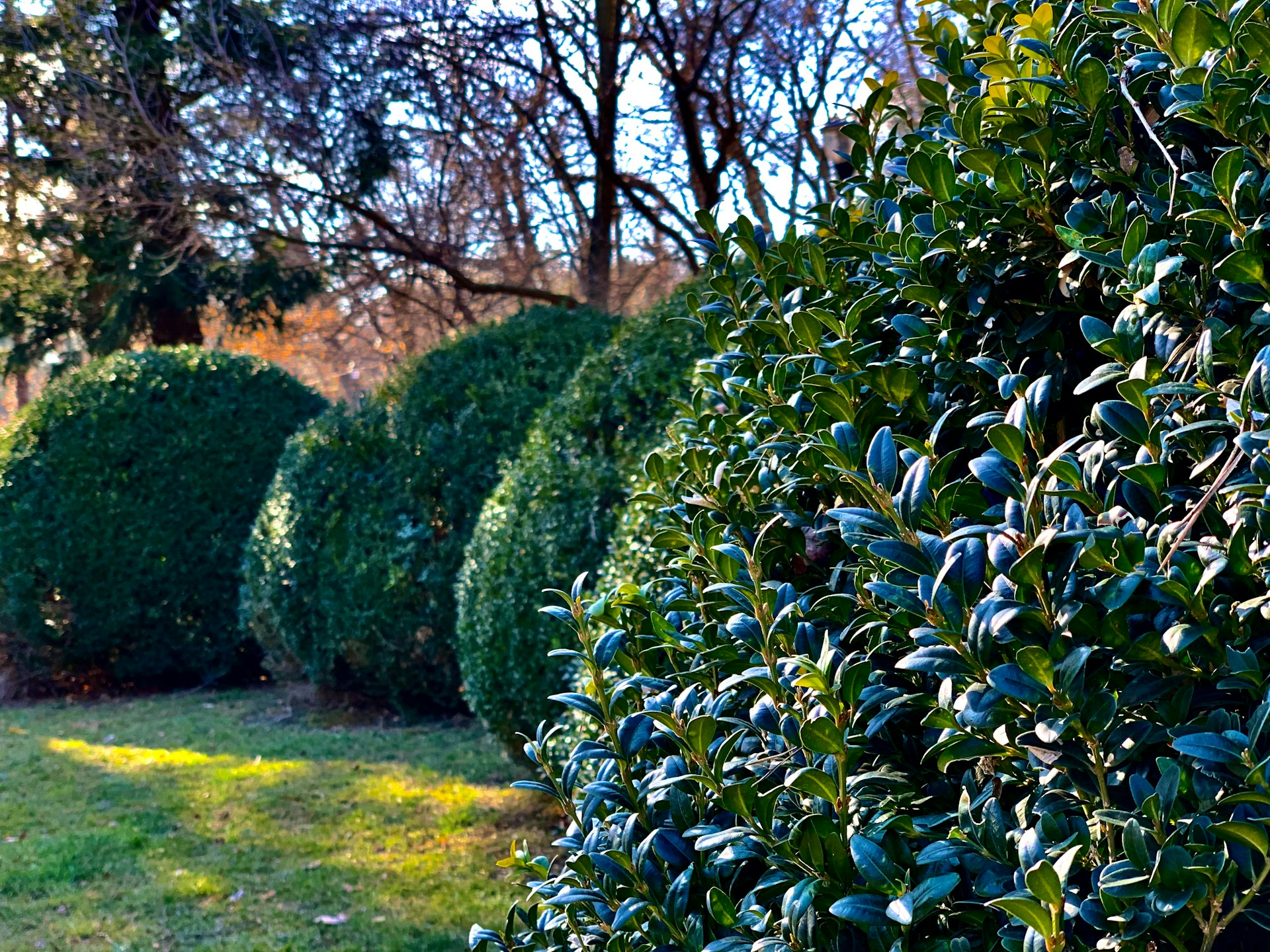
- Shrub shaping — by hand on detail-grade plants, hedge trim where appropriate
- Deep-root fertilization — soil-injected slow-release for stressed trees
- Diagnosis — pest, disease, decline patterns; treatment plan if it’s worth saving
- Removal — when the tree is hazardous or beyond saving; stump grinding optional
We don’t top trees. We don’t make flush cuts that strip the branch collar. We don’t prune off-season unless it’s an emergency. The hardest part of tree work is knowing what not to cut.
Most pruning happens in late winter when the tree is dormant and structure is visible without leaves. Some species (maples, birches, walnuts) bleed sap in late winter and prefer summer pruning. Spring-flowering shrubs are pruned right after bloom; summer-flowering ones are pruned in late winter. Bad timing won’t usually kill a plant, but it can cost you a year of bloom or set up disease entry.